Animal Cruelty Prevention

According to the ASPCA an animal is abused every 60 seconds. The Humane Society of the United States reports that most cases of animal abuse go undetected. Animal cruelty takes many forms, from neglecting to provide clean water, food and veterinary care to severe beatings and other physical attacks. It is hard to believe that animal abuse is still a serious problem in modern society. It is horrible to think about, but the results of ignoring animal cruelty are even more devastating.
Animal cruelty is often committed by a person who feels powerless, unnoticed or under the control of others. The motive may be to shock, threaten, intimidate or offend others or to demonstrate rejection of society’s rules. Some who are cruel to animals copy acts they have seen or that have been done to them. Others see harming an animal as a safe way to get revenge against someone who cares about that animal which is why animals are protected in restraining orders.
Preventing animal cruelty is in the best interests of a community, as well as, important for public health. Studies have shown that cruelty to animals is a sign that other abuse is taking place in the home. Animal abuse is clearly linked to other violent crimes, such as domestic violence, assault and sex crimes. Those same studies show that children who witness animal abuse are at a greater risk of becoming animal abusers themselves.
We can break this cycle through education and prevention. The best way to fight cruelty is to teach as many people as possible about how their pets should be treated and what they should never ever do. Parents and educators should teach children how to safely and humanely interact with animals at an early age, as well as, how they can tell if an animal is being harmed and what to do about it.
Animal cruelty includes intentional, malicious acts of harm and neglect. Unfortunately, unless you witness something happening, it’s not always clear when something constitutes neglect. Most people don’t go so far as to actually lay hands on their animals to hurt them but instead, they neglect the needs of their animals. Signs of neglect include injuries or illnesses that linger untreated, poor living conditions (including filth and dangerous objects near the animal and it being left outside in bad weather), bones being visible through the skin, and extremely poor grooming.
So what do you do if you notice an animal that appears to be suffering from one or more of these issues? Call your local animal welfare agency immediately. In most areas, someone from the local animal control agency, humane organization, or animal shelter will be responsible for investigating and enforcing the local anti-cruelty laws, but if you don’t know who’s in charge in your city or town, you can always call the local police non-emergency number to find out who to report the cruelty to.
Kathryn Ketchum
Interim Animal Services Director
City of Dickinson
Our Q2 2022 Webinar Calendar is Now Available

Supported by partners like the Texas Education Agency (TEA), Spindletop Community Impact Partners, Inc. and others, our free webinars are designed to provide critical safety education and resources to schools and communities across Texas.
All webinars are free-of-charge.
VIEW FULL CALENDAR HEREAn array of safety topics will be covered in the following key areas:
- S.A.V.E. (Safety Actions. Valuable Education) webinar series is a FREE virtual platform to inform, educate and provide resources for teachers, school administrators, school-based law enforcement, school related safety personnel, as well as all Crime Stoppers organizations on the many topics that concern the safety of our schools and community. This series will be offered on Mondays at 10am:
- April 4: Prom Safety
- April 18: Importance of Animal Safety Education in Schools and Reporting
- April 25: Mental Health for Educators and Students during Testing
- May 2: Testing Stressors: Mental Health Strategies
- May 16: Think Before you Post
- May 23: Summer Safety
- June 13: Summer Situational Awareness
- June 20: Reporting: Creating a Safe Space
- June 27: Bystander Interventions
These S.A.V.E. webinars are made possible by the Texas Education Agency (TEA) and Spindletop Community Impact Partners, Inc.
- Presentations for the Community: Through multimedia presentations, the Safe Community Program (SCP) presents cutting edge information about the most critical crime trends and issues facing our community today. These presentations equip all community members with not only knowledge about these critical issues but also action steps to aid in building safe, happy, and healthy communities around them. This series will be offered on Tuesdays at 11am:
- April 5: Animal Safety Seminar
- April 19: Social Media and Mental Health
- April 26: Mental Health Adults
- May 3: Financial Crimes
- May 17: Elder Abuse Lunch & Learn
- May 24: Seasonal Safety
- June 14: Home Security and Situational Awareness
- June 21: Safety Planning for LGBTQ+ Populations
- June 28: Recognizing and Reporting Child Abuse
These Safe Community presentations are made possible by Phillips 66, The Hamill Foundation, Harris County Commissioners Court – Commissioner R. Jack Cagle, Harris County Commissioners Court – Commissioner Tom Ramsey, Lawrence and Linda Levy, Cheniere Energy, Houston PetSet, and Harris County Sheriff’s Office Foundation.
Download the Q2 2022 Webinar CalendarThe Politicization of Crime: 3/30/22

As crime continues to be politicized, sadly Crime Stoppers is becoming a target. While none of this will deter us from being a voice for victims, when possible, we will share the attacks and our response. Read more below:
In 2019, Crime Stoppers of Houston began noticing a trend in which many of the defendants charged with murder were released on multiple felony bonds, person recognizance (PR) bonds, motion to revoke bond denied and bond forfeiture.
Since then, we have compiled a list of victims killed/murdered by defendants that had been released on the above at the time of their death. Sadly, this list has grown to over 160 men, women and children who have lost their lives at the hands defendants that have shown time and time again that they are a direct threat to our community. We are not talking about low level felony case or misdemeanor case or even drug related case. We are talking about violent felonies as defined by the FBI’s Uniform Crime Reporting of 2019 that includes murder, non-negligent manslaughter, forceable rape, robbery, and aggravated assaults. All of which are arguably the most feared types of victimization in our society.
Crime Stoppers of Houston has consistently stated this as a crime crisis and public safety issue. Unfortunately, there are forces in Harris County that have decided to make this a political issue and sought to discredit Crime Stoppers in the process.
Articles, tweets and reports have been circulating with untruths, misrepresented information and misquotes.
One such article from the New Republic. In it the author stated that they reached out to Crime Stoppers of Houston, yet we never received a phone call, message, or email requesting comment. The author also misquoted a representative of Crime Stoppers USA to fit the narrative they were trying to create. Below are a few examples:
The author stated that Crime Stoppers “encourages citizens to have constant vigilance for potential crimes”.
That is true, we encourage citizens to have constant vigilance for potential crimes that they could become victim of. We also encourage citizens to report information they have regarding violent felony suspects.
The author stated that “law dictates that felony defendants pay a $50 fee that goes to Crime Stoppers as a condition of their parole.
This is not true. The fine the author is referring to applies to defendants that have been convicted and placed on probation. Texas law states that if a judge deems the defendant has the ability to pay, they may order the defendant to pay a fine in an amount not to exceed $50.
The author stated that “the chapter did not respond to questions”.
That is not true. We did not receive any phone calls, messages, emails or text messages asking for comment.
The author stated “America’s Most Wanted demanded viewers perform their civic duty by helping law enforcement with tips, after melodramatic depictions of crimes, much as Dave Ward did in Houston.”
Is this a form of victim shaming? Does the author think that a victim of violent crime is exaggerating or being overemotional (see definition of melodramatic)? We wonder if the victims would think they were being melodramatic when they bravely reported what happened to them?
The author stated, “Crime Stoppers relies on a model that encourages people to call the cops early and often”.
That is not true. We don’t encourage people to call the cops. We encourage them to call Crime Stoppers with information on felony cases and violent fugitives.
The author asked, “What happens if I’m mad at an ex-boyfriend and submit a fake tip?” I asked Chris Cameron, a chairperson with Crime Stoppers’ national organization. She said that they do get prank tips and other useless information, but they let police sort it out. “We just send them everything,”.
Ms. Cameron was misquoted here. She said that because of the nature of our business, we do receive some fake tips and some do not have enough information to be able to do much with but we send everything over to police because we just don’t know if a tip contains a missing piece of the puzzle police can use to help solve a case. That said, each site operates differently. CSOH vets all tips prior to sending them to law enforcement to weed out malicious or fake tips. Additionally, a tip alone is not enough to warrant law enforcement to make an arrest right way unless the tip is related to a fugitive that has an active warrant. Again, this information is vetted to confirm the fugitive is in fact a fugitive and has an active warrant.
The author stated, “Cameron also made the case for Crime Stoppers by noting that a tip that goes directly to cops can’t really be 100 percent anonymous, because it can be used in discovery or subpoenaed”.
That is not true. Ms. Cameron said they CANNOT be subpoenaed or foia’d. She also said we guarantee anonymity. Had the author contacted Crime Stoppers of Houston, we would have said the same thing and added that Texas Government Code 414 protects a tipster’s anonymity, Crime Stoppers does not have caller id, does not record calls and all web-based tips are scrubbed of IP addresses prior to final submission.
The author noted that, “The first category on the tip form for Crime Stoppers of Houston is “School related and bullying,” and it asks a series of questions like the grade, date, description, and a list of everyone involved. In the “Drugs” section, the first question is: “Does the suspect sell or use drugs? Or both?”
That is not true. The first category on the tip form is Aggravated Assault but that is just splitting hairs. The bigger question is what is wrong with a student reporting on campus bullying? Bullying victims are between 2 to 9 times more likely to consider suicide.
Crime Stoppers of Houston Facts:
- We take tips on felony cases approved misdemeanor cases that are limited to animal cruelty, domestic violence, and campus-based crimes.
- Nearly 60% of the cases solved between 1980 and 2021 with the help of Crime Stoppers tips are violent in nature or have a likelihood of being violent.
- Between 2010 and 2017 94% of the suspects charged and/or arrested with the help of Crime Stoppers tips had previous criminal history
- 90% of those suspects were found guilty and received some form of punishment from diversion programs to prison sentences
- 93% of murder suspects charged and/or arrested with the help of Crime Stoppers tips were convicted
- We also work hard to educate the community about crimes they could become victims of
- Our campus program gave 879 presentations in 2021 99.43% were on topics other than tip line
- Our community program gave 308 presentations in 2021 98% were on topics other than tip line
Human Trafficking Awareness Day – Jan. 11

In acknowledgment of Human Trafficking Awareness Day, the Alliance of Leadership & Innovation for Victims of Exploitation (ALIVE), embraces victims and survivors of human trafficking. ALIVE’S founder, Melinda Metz has a saying, “It’s about saving lives.”
Victims and survivors want and deserve a chance to start, or restart, their lives after exploitation. The opportunity to have healthy choices, to feel alive, free, liberated.
Throughout history many courageous abolitionists have battled the business model of slavery. While this human atrocity remains in its evolved form, ALIVE’s Mission is “dedicated to ending sex trafficking in the Black community, by leveraging awareness and prevention through innovative solution-focused events.” Our Vision, “To behold a Black Community free from sex trafficking and exploitation.”
Women and girls of color continue to be disproportionately impacted by the sex trade. Their vulnerabilities, a result of structural violence, including poverty, homelessness, lack of education and over-sexualization at an early age, make them targets for exploitation, as well as increasing the chances they will be arrested for their own victimization.
According to Johan Galtung, “structural violence” is an avoidable impairment of fundamental human needs. He introduced the term in the article “Violence, Peace and Peace Research” in 1969. It refers to a form of violence where some social structure or social institution may harm people by preventing them from meeting their basic needs.
Paul Farmer defines it as “one way of describing social arrangements that put individuals and populations in harms way… The arrangements are structural because they are embedded in the political and economic organization of our social world; they are violent because they cause injury to people… neither culture nor pure individual is at fault; rather historically given (and often economically driven) processes and forces conspire to constrain individual agency. Structural Violence is visited upon all those whose social status denies them access to the fruits of scientific and social progress.”
ALIVE exists to address the root cause of exploitation as it manifests in the Black community, embedded in society due to structural violence. Our Purpose is “To respond to the impact and ongoing harm of exploitation, address cultural barriers and collaborate to heal a hurting community. By hosting and/or collaborating in large and small-scale events, ALIVE educates communities of color, and society at large, about the urban experience in the sex trade.”
While Alive is headquartered in Houston, Texas, we have a national platform. Our impact has recently been felt on Capitol Hill. Our Co-Founder, Rev. Dr. Marian Hatcher, a survivor leader, testified before the U.S. House Financial Services Committee this past Spring and was the inspiration for, and a contributor to, the Debt Bondage Repair Act (DBRA) (McHenry Applauds Inclusion of Debt Bondage Repair Act in NDAA | Financial Services Committee Republicans – house.gov), which passed as a part of the Annual National Defense Authorization Act 2022. Signed into law by President Biden, Monday December 27, 2021.
“The DBRA final text has the potential to help thousands of victims every year by ensuring that a consumer reporting agency may not furnish a credit report with adverse information from a severe form of trafficking.”
ALIVE will continue to fight for each victim to become a survivor, a champion, so their future and that of their families, is full of life, purpose, happiness, dignity and respect.
National Bullying Prevention Month – A Year in Review
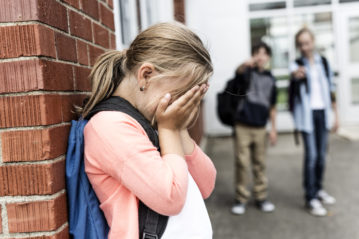
Hopefully by now you are already aware that October is National Bullying Prevention Month. With the goal remaining bullying prevention, let’s look back at a few news stories that gained national attention over the last twelve months since our last Blog during the month of awareness.
News Story One: January 25, 2021, A Houston father of five is dead after a confrontation that allegedly stemmed from his 15-year-old daughter being cyberbullied by another teen.[1] Brandon Curtis, 35, was shot more than once on Friday evening. The shooter claimed he shot Curtis in self-defense, as reported by ABC-13. The Harris County Sheriff, Ed Gonzalez, tweeted that Curtis took his daughter to fight a group of teenagers. During the fight, Gonzalez alleges, several other people got involved, including Curtis. Harris tells the station that her daughter had been bullied on social media by a teenage boy for nine months. She shared some profanity-laced messages with the station. Harris claimed she and her husband spoke with the boy’s father a few months ago, but that the bullying had never subsided. She said her husband, daughter and son went back to address the issue for a second time when the fight broke out.
News Story Two: March 14, 2021, Pennsylvania Woman Accused of Using Deepfake Technology to Harass Cheerleaders. Three teenagers in a Bucks County cheerleading program were subjected to a campaign of harassment using altered videos and spoof phone numbers, police officials said.[2]
News Story Three: An upstate New York teen died by suicide after he was allegedly blackmailed with “personal” images on social media, according to his family.[3] Riley Basford, 15, took his own life on March 30 in Potsdam, New York after being “bombarded” with online threats, the Watertown Daily Times reported. Shortly before the teen’s death, an unidentified social media user threatened to leak sensitive snapshots of Basford if he didn’t pay $3,500. New York State Police confirmed they’re investigating a number of other incidents in which teen victims were targeted online in similar catfishing schemes.
News Story Four: July 1, 2021, Cyberbullying of Wilson 6th grader abruptly stops after possible hacker says mom ‘told me to apologize.’ A message appeared, it said “I won’t hack you anymore. My mom caught me hacking you.” A second message appeared saying, “She told me to apologize. I’m sorry for hacking you.”
What we know from stories such as the four referenced here, is that bullying is still a prevalent part of modern society. The consequences of bullying activities left largely unchecked show a potential to be fatal. Bullying can affect everyone—victims, aggressors, families, and those who witness bullying. Bullying is linked to many negative outcomes including impacts on mental health, substance use, suicide, and homicide. It is important to talk to people in your community, including kids, to determine whether bullying is a concern and to educate.
Kids Who are Bullied
According to https://www.stopbullying.gov/bullying/effects those ids who are bullied can experience negative physical, social, emotional, academic, and mental health issues. Kids who are bullied are more likely to experience:
- Depression and anxiety, increased feelings of sadness and loneliness, changes in sleep and eating patterns, and loss of interest in activities they used to enjoy. These issues may persist into adulthood.
- Health complaints
- Decreased academic achievement—GPA and standardized test scores—and school participation. They are more likely to miss, skip, or drop out of school.
There appears to be a correlation between victims and violence. A very small number of bullied children may retaliate through extremely violent measures.[4] In 12 of 15 school shooting cases in the 1990s, the shooters had a history of being bullied.
Kids Who Bully Others
Conversely, kids who bully others can also engage in violent and other risky behaviors into adulthood. Kids who bully are more likely to:
- Abuse alcohol and other drugs in adolescence and as adults
- Get into fights, vandalize property, and drop out of school
- Engage in early sexual activity
- Have criminal convictions and traffic citations as adults
- Be abusive toward their romantic partners, spouses, or children as adults
Bullying Statistics [5]
How Common Is Bullying
- About 20% of students ages 12-18 experienced bullying nationwide.
- Students ages 12–18 who reported being bullied said they thought those who bullied them:
- Had the ability to influence other students’ perception of them (56%).
- Had more social influence (50%).
- Were physically stronger or larger (40%).
- Had more money (31%).
Bullying in Schools
- Nationwide, 19% of students in grades 9–12 report being bullied on school property in the 12 months prior to the survey.
- The following percentages of students ages 12-18 had experienced bullying in various places at school:
- Hallway or stairwell (43.4%)
- Classroom (42.1%)
- Cafeteria (26.8%)
- Outside on school grounds (21.9%)
- Online or text (15.3%)
- Bathroom or locker room (12.1%)
- Somewhere else in the school building (2.1%)
- Approximately 46% of students ages 12-18 who were bullied during the school year notified an adult at school about the bullying.
Cyberbullying
- Among students ages 12-18 who reported being bullied at school during the school year, 15 % were bullied online or by text.
- An estimated 14.9% of high school students were electronically bullied in the 12 months prior to the survey.
Types of Bullying
- Students ages 12-18 experienced various types of bullying, including:
-
- Being the subject of rumors or lies (13.4%)
- Being made fun of, called names, or insulted (13.0%)
- Pushed, shoved, tripped, or spit on (5.3%)
- Leaving out/exclusion (5.2%)
- Threatened with harm (3.9%)
- Others tried to make them do things they did not want to do (1.9%)
- Property was destroyed on purpose (1.4%)
By increasing the awareness of some of the effects of bullying on victims, aggressors, and the related statistics, hopefully by October of 2022 we will collectively see a decline in the number and frequency of bullying occurrences. The goal remains consistent, bullying prevention.
[1] https://people.com/crime/texas-dad-killed-confronting-group-daughter-cyberbullying-says-family/
[2] https://www.nytimes.com/2021/03/14/us/raffaela-spone-victory-vipers-deepfake.html
[3] https://www.yahoo.com/now/split-second-madness-ny-teen-145300933.html