Don’t be a Noob – Talk to Boys About Online Safety

April is National Child Abuse Prevention Month, and it’s an important time to talk about the online exploitation of children. Today, children are spending more time on the internet. During the COVID-19 pandemic there has been a dramatic increase in reports of online exploitation. In the year 2020 alone, reports of online enticement to the National Center for Missing & Exploited Children (NCMEC) to the CyberTipline grew by 97.5% compared to 2019. Online video games have been very popular for years and are especially popular now. Because of social distancing precautions, more and more children (especially boys) are playing online video games for entertainment and as a way to socialize with friends.
. Online sexual exploitation using gaming platforms is often not at the top of their list of concerns. If you’re a “noob” or someone new to online gaming, it is important to know that these video games are not like what you might have played as a young person- they have become more than just games, but also a tool to connect with friends and meet new people. Using built-in chat features on consoles like Xbox and PlayStation, young children can connect through the game itself and on sites Several games feature “lobbies” for players to converse before beginning game play. In this context, it is common to develop relationships with strangers.
The anonymity of online interfaces of these gaming platforms increases the risk of sexual exploitation, and boys are particularly vulnerable. According to Pew Research Center, players of online video games are disproportionately boys, with 97% of teen males playing video games on some device. Though most people who play online games have positive experiences, as with any platform that allows communication with others, there is the possibility for online sexual exploitation. For example, competitive team-centric shootout style games with a shared objective to achieve victory are particularly popular right now. Perpetrators target and groom children by building camaraderie as a teammate to learn personal details in a way that is unique to gaming platforms, and then use this information and trust to sexually exploit the child. With boys spending so much time online and the potential for unmonitored interactions, we need to talk about it.
Start the conversation and do some research. Talking about online sexual exploitation can be hard, so NCMEC developed resources to help! NCMEC offers a variety of tools to help jumpstart talking to your children about online safety and signs of potential online exploitation. Parental involvement is critical when it comes to helping children game more safely. Take an active interest in the games that your child plays and wants to buy; that means talking to them about it and doing a little research on the game’s rating, game-play style, content and age-appropriateness.
Teach online safety skills. Into the Cloud, NCMEC’s animated online safety adventure series, presents important safety information in an age-appropriate and entertaining manner for children 10 and younger. To start a dialogue with your child, each episode has a corresponding You can find more resources to teach children of all ages online safety skills by visiting www.missingkids.org/netsmartz.
Report. If you suspect sexual exploitation of a child, even if you’re not sure, report it to the CyberTipline. NCMEC’s CyberTipline® is a centralized reporting system for online exploitation of children. NCMEC staff review each tip and then make the report available to the appropriate law enforcement agency for possible investigation.
To make a CyberTipline Report, visit report.cybertip.org.
Every child deserves to feel safe and protected, period.
My name is Kerry McCracken. I am the Executive Director of The Children’s Assessment Center, Harris County’s Advocacy Center for sexually abused children. I am so grateful that April has been designated as National Child Abuse Prevention Month to bring even more emphasis to this sad but important issue.
Every child deserves to feel safe and protected, period.
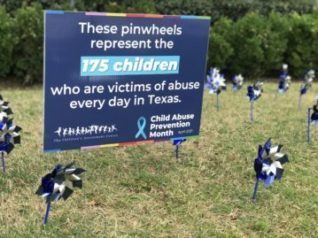
175 children are abused in Texas every day. 700,000 children are abused in the United States every year. These numbers are shocking and unacceptable.
Child abuse comes in many forms. Physical abuse, sexual abuse, neglect, emotional abuse, and malnutrition are all abuse. No form of abuse is acceptable and all forms of abuse are preventable. That’s where you come in. It is every adult in our community’s job to protect children and prevent abuse. So how do we do that?
Report any suspicion of child abuse. It’s the right thing to do. Many people are afraid of reporting suspicions of abuse but when weighing the pros and cons it is an easy choice:
(1) Report child abuse so that a trained professional can investigate the allegation and either determine that no abuse occurred or determine that abuse has occurred and remove the child from danger; or
(2) Don’t report child abuse and run the risk that a child will continue to be abused, that additional children will be abused, or worse yet, that the child will suffer serious harm or death.
Educate yourself. Learn to recognize the signs and symptoms of child abuse. Common behavioral signs include depression, anxiety, anger, loss of appetite, withdrawal from normal activities, substance abuse, self-mutilation, fear of certain places or bed-wetting, night sweats, nightmares, and thoughts of suicide. Sexual acting out and language that is not age-appropriate are also signs of sexual abuse. Learn more about recognizing the 10 Signs of Child Abuse and Tips for Protecting Your Children.
Talk to your children. In the digital age, talking to your children is more important than ever. Don’t wait until your kids are teenagers. Start young and talk often. It’s an ongoing conversation and an important conversation. Let them feel safe talking to you. Teach them about boundaries. Ask who their friends are and make sure they are age-appropriate. Here are some age-appropriate books to start the conversation about body autonomy and how to keep their bodies safe.
Monitor your children’s online activity. Predators use the internet to find victims and due to the pandemic, kids spend more time online than ever. Pay attention. Know who your kids are talking to online and know what sites they visit. You can learn more about how to protect your children by using blocking and filtering software.
The point of Child Abuse Prevention Month is to bring awareness, not fear. Knowledge is power and we owe it to the children of our community to arm ourselves with the tools to be their protectors and their voice. Please join me, not only in April but year-round.
Report Suspected Abuse
Call 1(800)252-5400 or 9-1-1
www.txabusehotline.org
Protect yourself and your family from financial crimes.

March is Financial Crimes Awareness month and we are thrilled to partner with the Houston Police Department (HPD) to bring valuable awareness and education about this subject. In this post HPD discusses what constitutes a financial crime, signs of financial exploitation, and best practices to protect yourself and your loved ones from financial victimization.
What is Financial Crimes? Financial Crimes deal with anything concerning financial crimes; such as Identity Theft, Credit Card Abuse, Theft and Forgery of Governmental Documents. Must of Financial Crimes deal with Identity Theft.
Identity Theft is a common term used by all types of crimes in which some wrongfully obtains and uses another’s personal data in some manner that involves fraud or deception, usually for economic gain. Identity theft is one of the fastest growing crimes in America.
How is Identity Theft Committed? It can be committed by Shoulder Surfing, Business Record Theft, Scamming, Phone Fraud, Skimming, Dumpster Diving, Mail Theft, Steal Wallet or Purse, The information Highway and Spoofing and Phishing.
What are some of the warning signs of Identity Theft?
- Your monthly credit card and bank statements suddenly stop arriving.
- You are denied credit for reasons that do not match your understanding of your financial position.
- You start getting bills from companies you do not recognize.
- You receive calls from collection agencies or creditors for an account you don’t have or that is up to date.
- You observe unusual entries on your credit report.
- Financial account statements show withdrawals you didn’t make.
- A creditor calls to say you’ve been approved or denied credit that you haven’t applied for or you get credit card statements for accounts you don’t have.
What do you do if you are a victim of identity theft?
- Contact the companies or institutions where you know fraud has occurred. You should contact their fraud department and explain that you are a victim of identity theft. Ask them to freeze or close the accounts. Then change any logins, passwords, or pins you may have for those accounts.
- Place a fraud alert with one of the three credit bureaus: Experian, Transunion, or Equifax.
- Report the incident to your local law enforcement agency as well as the Federal Trade Commission (IdentityTheft.gov).
- You should obtain a copy of your credit report and review it. Make note of any accounts or transactions you do not recognize.
- Stay vigilant! Unfortunately, once your personal or financial information has been compromised there is no way to recall or retract it. You will have keep a close eye on all of your accounts and look for any suspicious activity.
Be An Advocate for Animals in Harris County and Across Texas
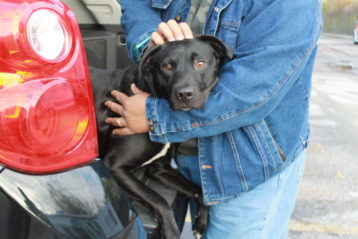
Did you know that animal abuse, cruelty, neglect, and abandonment are crimes that are punishable by law? In 2020, the Harris County Animal Cruelty Taskforce, an organization that Houston PetSet and Crime Stoppers of Houston helped establish, received 4,881 reports of such offenses.
This statistic is significant not just because it is disturbing that animals are being harmed at an alarming rate, but also because there is a proven correlation between crimes against animals and crimes against humans. According to the National Link Coalition, “animal abuse is ‘the tip of the iceberg’: the way animals are regarded in a family is a window into interpersonal relationships and family dynamics. Investigators who find animal cruelty, abuse, or neglect are rarely surprised to see other issues lurking beneath the surface.”
Unfortunately, animals do not have a voice to use to speak for themselves, so they are an easy target for offenders to begin their abuse with; the offender learns to assert their dominance and, if they are not stopped, can progress to hurting children and other adults. In fact, a 1997 study by the Massachusetts Society for the Prevention of Cruelty to Animals and Northeastern University found that animal abusers are five times as likely to also harm other humans.
For example, in December of 2019, a Houston man was sentenced to six years in prison for stomping his ex-girlfriend’s cat to death. This came just three years after he was convicted for the injury of an elderly person when he assaulted his 72-year-old great-grandmother.
In a quote from the Houston Chronicle’s article regarding the matter, the prosecuting lawyer stated, “This is a case that shows the direct link between animal abuse and violence toward other people,” Jessica Milligan [head of the animal cruelty section at the Harris County District Attorney’s Office] said. “Someone who can hurt his own great-grandmother, then kill a cat in a domestic dispute is someone who is capable of violent behavior against people, including children, in the future.”
If you suspect you have witnessed animal cruelty, abuse, neglect, or abandonment, please file a report with the Harris County Animal Cruelty Taskforce at 927paws.org, the Houston SPCA at 713-869-7722, or the Houston Police Department at 713-884-3131. After you have submitted your report, leave the investigation and prosecution to the experts. The location of your report is considered the scene of a potential crime and must be left untouched and uninterrupted.
Each day we are making strides towards strengthening laws to protect animals. If you are interested in learning more about how you can become an advocate #ForTheAnimals, please visit Houston PetSet’s website at houstonpetset.org.
Another Perspective of Exploitation in Houston
Born and raised in Southeast Houston, abandoned at birth, raised, loved and enabled by many, my name is Tracy Dudley, and I am the Founding Survivor of Project Girls, a crisis intervention program that targets exploitation primarily in Southeast Houston. I spent many years on the southeast side of Houston as an angry, violent, drug addicted prostitute. I never had a pimp, nor was I forced into the life by another human being. Instead, my pimp was camouflaged in a dope mans body. My pimp hid in the trauma I experienced growing up, the self hatred that I learned to nurture and survive with. My pimp was the anxiety and frustration I felt year after year in not feeling important or that I mattered. From this place of pain an alter ego was born. Countless women, like myself make vows and promises from this place as desperate attempts are made for power and control and the confidence that escapes so many.
Today as an overcomer with more than 17 years’ experience, I am honored to stand with the countless survivors, agencies, initiatives, concerned families, government officials and NGO’s who have taken a stand in the fight to end the demand and the crime of trafficking in our country. I have worked with countless women in desperate attempts to rise from a place of pain and rejection by running drugs and men as a way to feel powerful and to pay life back for the cards they have been dealt.
In looking at the landscape of trafficking and in an effort to expand our understanding, the more we know about those we serve the greater chance of justice can be found. Today it appears the open sex trade and exploitation lurks at every turn. According to the Cambridge Dictionary the definition of exploitation is ‘the act of using someone unfairly for your own advantage’. A closer look reveals trauma and vulnerabilities are the number one offender and have paved the way for many, both trafficked and those who we know as “renegades”. We run into women who have been forced to work the street, and drug addicted women who have found that prostitution creates the cash flow to not feed their drug habit. The lifestyle becomes a desperate attempt to feel chosen or important.
We have done well to identify the needs and gaps in services and in an attempt to further ones understanding of exploitation we see that not all victims got there the same way. For the renegade, the sex trade looks quite different than the countless women who have been trafficked. For these women, what used to be a transaction between a sex worker and a buyer has transformed into a game where the sex worker and the buyer begin to exploit one another, leaving one to wonder “ Who’s Exploiting Who”. With this in mind, we can reach further in bringing justice and healing to those we serve.
Tracy Dudley, Survivor